

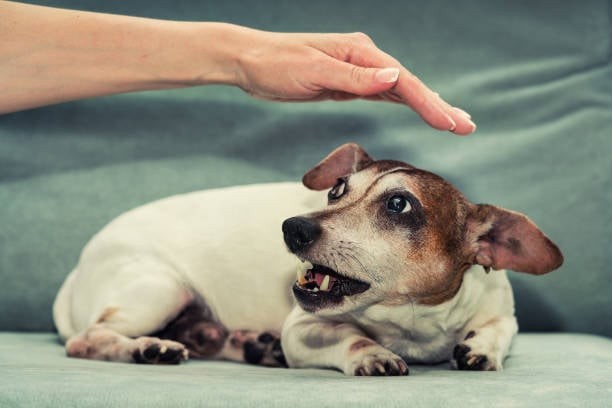
A dog barks at a visitor, pulls hard toward another dog, or growls when someone gets too close. In that moment, most owners want one thing: make it stop.
That reaction is understandable. Difficult behavior can be stressful, particularly when it happens in public or catches people by surprise. But stopping what can be seen is not always the same as understanding what caused it.
Dogs respond to situations for different reasons. Looking at what happens before, during, and after a reaction can give owners far more useful information than simply deciding the dog is being difficult.
Start With the Situation, Not a Label
Words such as “aggressive” can cover very different circumstances.
One dog may bark when unfamiliar people enter its home. Another reacts only when approached by dogs while on a leash. A third may become uncomfortable when somebody reaches toward its food or toys.
Those details matter.
Instead of beginning with a broad description, write down exactly what happened. Where was the dog? What was nearby? How close was the trigger? What did the dog do first?
Specific observations make it easier to see whether the same pattern keeps appearing.
Look for the Earlier Signs
The loudest part of a reaction naturally gets the most attention.
A dog barking and lunging is difficult to overlook. Yet something may have happened several seconds earlier. Perhaps the dog became still, stared, moved away, closed its mouth, or stopped responding to its owner.
Those quieter changes can be important.
Owners seeking aggressive dog training austin may benefit from learning to recognize what happens before the strongest reaction. Spotting an earlier stage can provide more room to respond while the dog is still able to pay attention.
Waiting until everything has escalated makes the situation harder for everyone.
Distance Is Not Always Avoidance
Imagine a dog that begins barking when another dog comes within fifteen feet. From forty feet away, however, it can notice the same dog and still respond to its owner.
Forty feet may be the better place to begin.
Creating distance is sometimes mistaken for avoiding the problem. In training, it can instead provide a workable starting point.
If the dog can think, respond, and recover at that distance, useful practice can happen. As things improve, the situation may gradually become more challenging.
Moving immediately into the hardest version does not necessarily make learning happen faster.
Individual Problems May Need Individual Attention
Some behaviors are difficult to reproduce in a general class.
Maybe the dog becomes upset only when someone approaches its front gate. Perhaps the problem appears around one particular household routine. An owner might also feel that a busy group environment makes it difficult to concentrate on the issue that brought them to training.
In situations like these, private dog training Buda TX can allow the session to focus on specific training deficits or behavioral concerns.
Individual work also gives the owner room to ask detailed questions about what happens during their normal routine.
That context can matter just as much as the behavior itself.
Management Can Prevent Repeated Problems
Training takes time. Meanwhile, owners still have to live with the dog every day.
This is where sensible management helps.
If a dog becomes highly worked up at a front window, changing access to that area may reduce repeated barking while training is underway. If close encounters with unfamiliar dogs consistently cause trouble, choosing a quieter walking route can provide more space.
Management is not the final lesson.
It simply prevents the dog from rehearsing the same difficult behavior over and over while better responses are being developed.
Measure More Than Perfect Behavior
Improvement does not always mean a reaction disappears immediately.
Look at recovery.
Does the dog calm down sooner than it did a month ago? Can it notice a trigger from a reasonable distance and return its attention to the owner? Is less space required than before?
These changes can show that something is moving in the right direction.
Owners sometimes overlook them because they are waiting for a completely problem-free day. Real behavior change is often less dramatic. Small improvements accumulate until situations that once felt impossible become much easier to handle.
Conclusion
Difficult dog behavior deserves careful observation rather than a rushed response. Looking at triggers, early signals, distance, environment, and recovery can help owners understand what they are actually dealing with and choose a more suitable way forward.
When a concern is specific to one dog or situation, individualized guidance may also make the training process easier to apply in everyday life. Owners interested in professional support can visit caninemoxy.com to learn more about its available dog-training services and approach to owner education.