
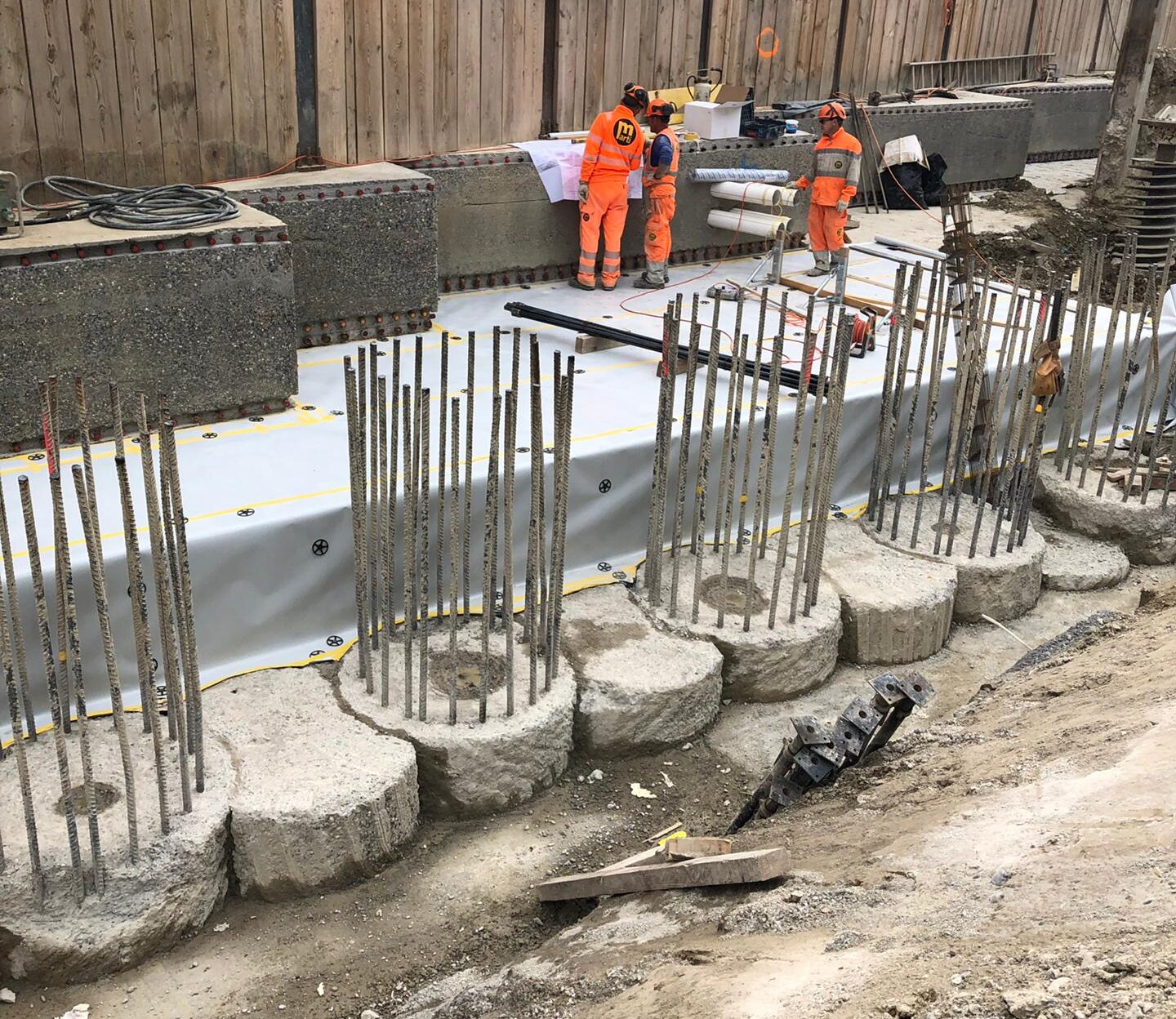
The foundations of large buildings and projects of infrastructure has to withstand very large loads. Prior to construction, engineers need to determine a foundation system that will be able to safely transfer these loads to safe soil or rock below the surface. Bohrpfähle are among the most common types of deep foundations that can be employed for this purpose. They are installed by boring holes into the ground and filling them with reinforced concrete, which can provide strong support for various structures and cope with different soil conditions in current construction projects.
Supporting Heavy Structural Loads
Bohrpfähle are mainly used to spread structural loads (above weak surface soils) down to stronger soils below. This makes them suitable for projects where shallow foundations cannot support the project.
Engineers can tweak both the width and depth of each post to fit precise needs, which makes Bohrpfähle a great match for all kinds of job sites. This flex means you can easily use Bohrpfähle on many builds, like tall towers, big plants, road bridges, and other frames that must sit on a rock-solid base.
Appropriate For City Development
Building stuff gets a lot harder when you try to work in busy city spots with tons of people around. Due to space constraints, adjacent structures and underground utilities, certain foundation techniques are used that cause minimal disruption and ensure structural safety.
Bohrpfähle are often used in these areas due to the reduced vibrations generated by many driven pile systems. They can be installed with control without compromising neighboring structures, and can be installed in a controlled fashion in a constrained working space, allowing efficient construction.
Adapting To Different Soil Conditions
The soil conditions differ from one construction site to another. The strength of the soils, groundwater levels and geological layers all affect the foundation system design.
The flexibility to use under different site conditions is one of the advantages of Bohrpfähle. Piles can be varied in length, diameter and degree of reinforcement to suit the requirements of the project and are applicable to most conditions of soft clay to dense gravel and weathered rock formation.
Construction Quality Matters
Design is only part of the equation when it comes to a strong foundation there’s also good construction. Geotechnical investigations are useful prior to construction commencing to understand soil behavior and load-bearing.
The critical elements of the construction of Bohrpfahls are the precision in the drilling, placement of reinforcement, and the controlled pouring of concrete. A regular inspection program and quality control measures are used to ensure that every pile is engineered to perform as required after stacking.
Long-Term Foundation Benefits
Infrastructure projects are to be safe and stable for many decades. Using a solid base cuts down on repair work and keeps the whole build standing tall and true.
Smartly built Bohrpfähle help a structure last for decades by holding weight steady, even as the soil shifts. They have done great work for years now, and they stay a top pick for any team building today.
Conclusion
Bohrpfähle are still capable of meeting the requirements of heavy foundations, which must be strong, durable, and flexible enough to withstand various construction projects. They are easily able to carry heavy loads and work well in various soil conditions, which makes them a reliable choice for engineers and contractors. Reliable results are still only possible if work is carefully planned, professionally installed and meticulously controlled for quality. For more advanced foundation technologies & engineering solutions, see Brextor.com for practical information and industry knowledge.