
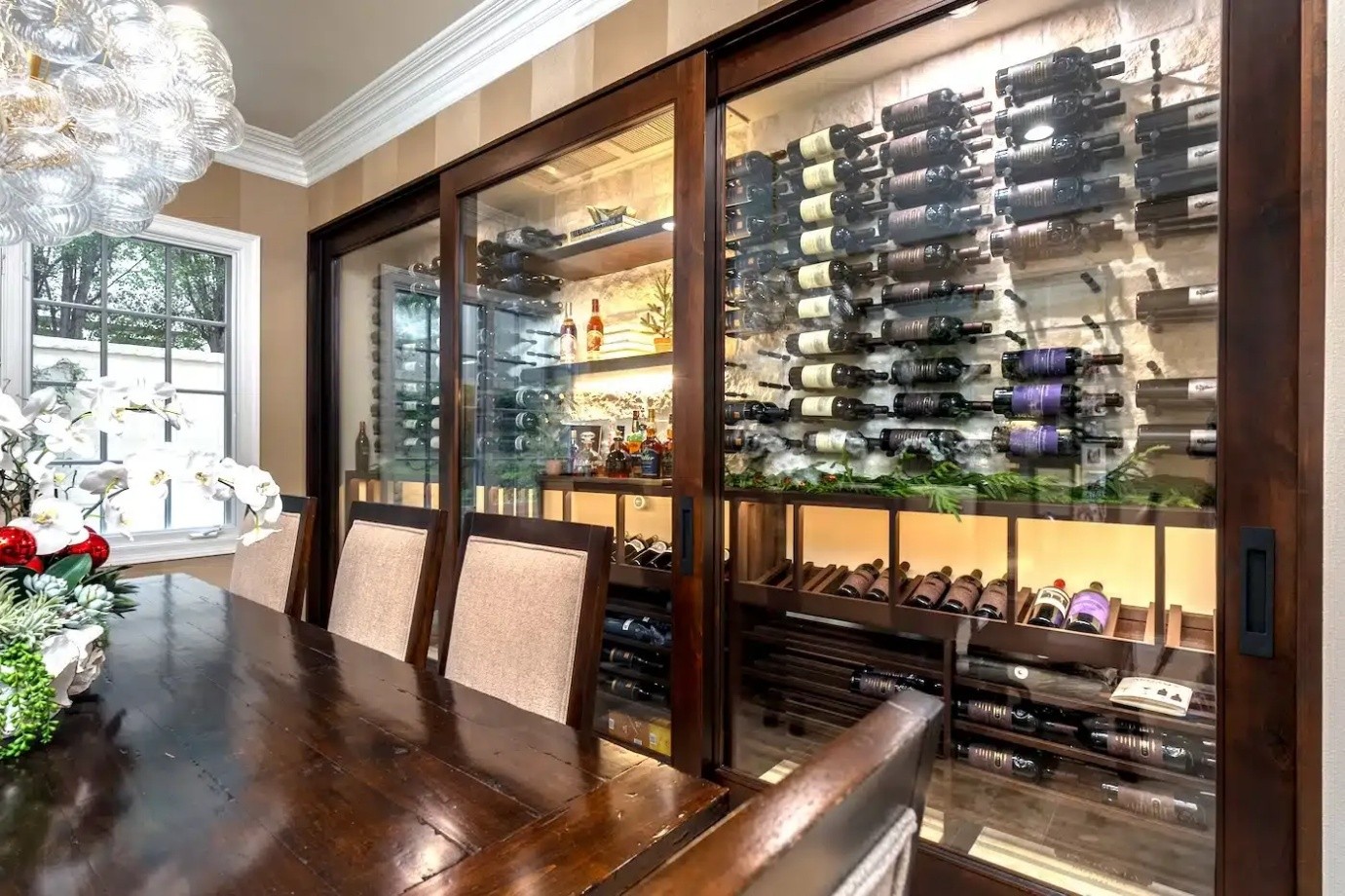
A wine cellar designer can only work with what you tell them, and most people tell them very little. “Something elegant, nothing too modern” covers a hundred different rooms. The first sketch then lands a little off, the second drifts further, and weeks go by. A clear brief shortens that loop dramatically, and putting one together takes an afternoon rather than a week, and the effort pays back at every stage that follows.
Bring Pictures, Not Adjectives
Words like “classic” and “clean” mean different things to different people. Collect ten or fifteen photos of rooms you admire, whether they’re cellars, restaurants, libraries or hotel bars. Save them in one folder so you can hand them over together. Mixed sources are fine; variety actually reveals your taste faster.
Next to each image, jot down what caught your eye. It might be the dark timber, the brass trim or the way one wall was left almost bare. Those notes turn a pile of pictures into a design language someone else can read, and they often surface preferences you hadn’t noticed yourself.
Explain How You Actually Drink
Wine cellar design specialists ask about your habits as much as your tastes. Do you open a bottle every night or save them for gatherings? Do you buy by the case, chase single bottles at auction, or receive gifts you never planned for? Each pattern changes the layout.
Hosting matters too. A person who pours for eight people at a time needs a counter and glass storage, whereas a solo collector may prefer a deep, quiet corner with plenty of racking and little else. Be candid, even if your real habits are less glamorous than the room you picture.
Be Honest About Money Early
Share a realistic range at the start, not at the end. A designer who knows the ceiling can steer you toward choices that fit it, rather than drawing a dream that collapses at quote time.
Rank your wishes while you’re at it. Which three features matter most, and which could wait? Some upgrades, such as extra lighting or a tasting counter, can be added later if the structure is planned to receive them. That keeps the first phase affordable without closing any doors.
Read the Renders Critically
A 3D image is persuasive, which is exactly why it deserves a hard look. Ask for views from where you’ll actually stand, not only the flattering angle from the doorway. Check how wide the aisle feels and whether the door swing clashes with anything.
Notice what’s missing, too. Cooling equipment, vents and drain lines often disappear from early pictures. Ask where each one will sit and how it will look, because those parts have to live somewhere, and they have strong opinions about wall space. Better to see them now than discover them on installation day.
Give Feedback That Moves Things Forward
“I don’t love it” gives the designer almost nothing. “The upper shelves feel too crowded and I want more empty wall around the focal point” gives them something to act on. Point at the specific spot and explain the feeling behind it.
Try to change one thing at a time. Three simultaneous revisions make it hard to tell which one helped. If two people share the decisions, agree between yourselves first, so the designer receives a single, consistent answer.
Know When to Stop Tweaking
Revision has a natural limit. After a few rounds, each change improves the room by less, and the project loses momentum. When the plan feels right most of the time, that’s usually your cue to approve it.
Lock the design before construction starts. Changes on paper cost nothing, but a wall that has already been framed or a rack that has already been cut makes every tweak expensive, and sometimes impossible. Treat approval as a real milestone, not a formality.
Conclusion: A Good Brief Gets a Better Room
Pictures, honest habits, a clear budget and precise feedback do more for a design than any amount of enthusiasm. They save time, reduce guesswork and make the first drawing much closer to what you imagined.
If you’d like to talk through your own ideas with someone who does this every day, customwinecellar.com is a sensible place to begin.