

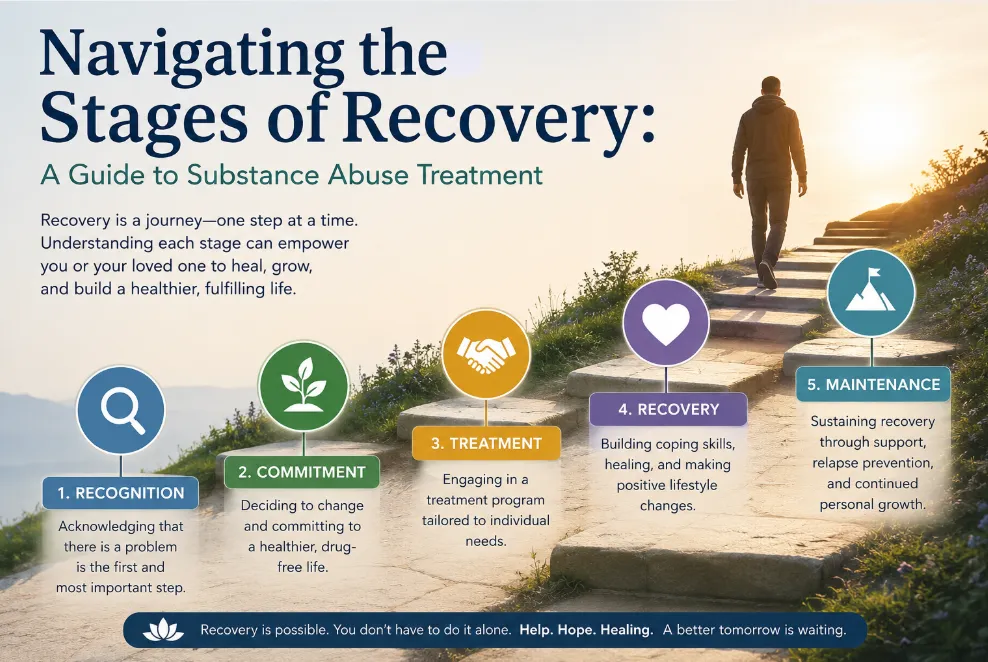
The path toward wellness after a substance abuse disorder is rarely a linear journey. It is better understood as a progression of distinct phases, each requiring different levels of support, introspection, and structural change. For individuals and their loved ones, viewing the recovery process as a series of evolving stages can help manage expectations, reduce the pressure for immediate perfection, and highlight the importance of persistent, long-term commitment.
The Initial Phase: Seeking Clarity and Breaking the Cycle
The first stage of recovery is often characterized by a transition from reactive survival to proactive decision-making. For many, this begins with acknowledging that a pattern of behavior has become unmanageable and that change is necessary. This early phase is typically marked by the search for substance abuse treatment near me and the initiation of a professional assessment.
The goal at this stage is stabilization. Whether this involves a structured environment or an outpatient program, the primary objective is to create a safe space where an individual can pause, reflect, and begin to understand the mechanisms driving their substance use. A thoughtful approach involves speaking with multiple types of providers to understand the range of programs available, from intensive monitoring to more flexible, community-based support groups. In these early days, the emphasis is on building a foundation of safety and beginning to disentangle daily habits from the cycle of dependency.
Developing New Patterns as the Process Progresses
As time passes, the focus of treatment naturally shifts from immediate stabilization to the deeper work of restructuring daily life. This is the period where many people begin to identify the specific triggers, social dynamics, and emotional cues that previously contributed to their substance use. During this phase, individuals often work with counselors or peer groups to develop new strategies for managing stress and navigating interpersonal relationships.
This stage is often about trial and error. Progress may be measured by the ability to identify a stressful situation early and implement a learned coping mechanism before it leads to a relapse or significant distress. As individuals gain confidence in these new patterns, they often find that the intensity of the initial support may shift. It is common for people in this phase to transition from more frequent clinical sessions to a rhythm that allows for greater personal autonomy, provided they remain connected to their support networks.
Identifying Progress and Recognizing the Need for Adjustment
Recognizing meaningful progress is essential, but it requires a realistic perspective. Progress is not always a clean, upward trajectory; it is often evidenced by a change in how a person responds to setbacks. A significant marker of growth is the ability to view a difficult moment not as a definitive failure, but as a piece of data that highlights where further support or strategy is needed.
During this stage of substance abuse treatment, it is common for the goals of the individual to evolve. What worked in the early months of recovery may need to be adjusted as the person’s life circumstances change. Perhaps a particular support group no longer offers the same level of insight it once did, or a shift in career requires new strategies for managing workplace tension. A key aspect of successful recovery is maintaining the humility to seek out new perspectives and professional guidance whenever the current strategies start to feel insufficient. Asking oneself questions like, “What parts of my routine are currently serving me, and what parts feel like they are creating friction?” can be a useful diagnostic tool during this middle phase.
Sustaining Results and Long-Term Integration
The final, and perhaps most critical, phase of recovery is the shift toward integration — where the skills learned in formal treatment settings become woven into the fabric of everyday life. This is the stage of long-term sustainability. The urgency of the early days has typically given way to a more quiet, consistent, and disciplined commitment to health.
Sustaining recovery often requires a deliberate design of one’s environment. This may involve building new social circles that prioritize different activities, finding hobbies that offer genuine fulfillment, or maintaining regular contact with mentors who understand the long-term nature of the commitment. For many, this stage also involves giving back, as helping others navigate their own process of recovery can reinforce one’s own sense of purpose and commitment.
The long-term picture of recovery is defined by flexibility. Life will inevitably present new challenges, periods of high stress, and unforeseen transitions. Those who maintain their health over the long term are typically those who remain vigilant about their own well-being, stay connected to their support systems, and understand that recovery is a dynamic, lifelong process rather than a static goal that is checked off a list.
The journey away from a substance abuse disorder is a testament to resilience. It requires the courage to reach out for substance abuse treatment and the patience to allow the process to unfold at its own pace. By focusing on steady, incremental change and surrounding oneself with appropriate support, individuals can move toward a future defined not by the patterns of the past, but by the choices they make in the present. The long-term perspective is one of building a life that feels authentic, manageable, and sustainable, one day at a time.
